Shot From The Sea
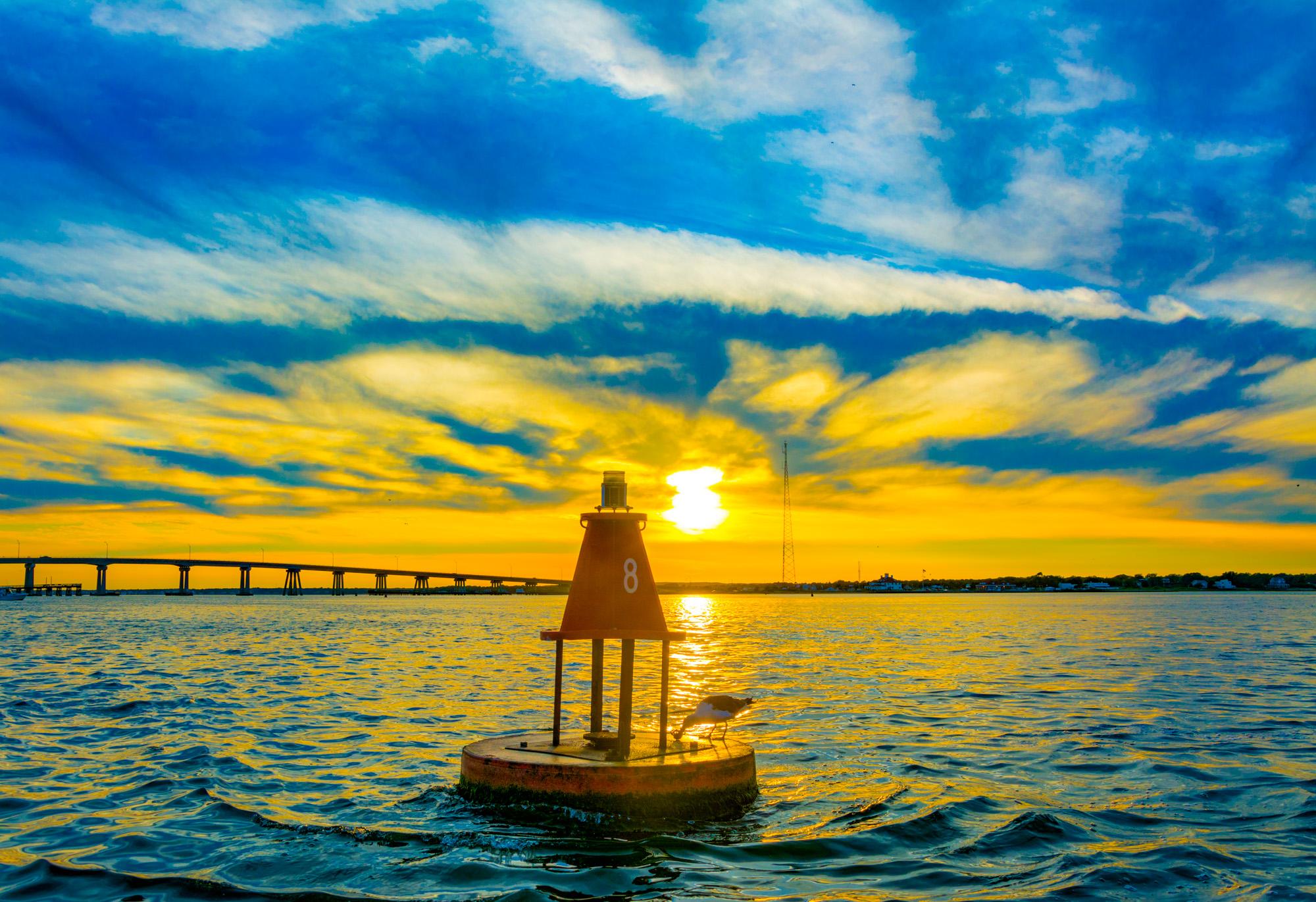
Buoy-8
I took this photo, "Buoy 8," from my small shellfish boat. While I spent most of my time offshore on large fishing vessels, I would often spend my off-time on Shinnecock Bay. I had rebuilt an old 19 ft Mako for commercial clamming and bay scalloping, customizing it to make manual shellfish gathering more efficient. Using mechanical means is forbidden to protect the shellfish population, so everything is done the old-school way. Clamming and scalloping are physically demanding. For clamming, boats drift with the wind and tide, while the fishermen pull a rake head through the mud, gathering clams in the rake as they drift. The clams are then pulled up from the bottom with an attached aluminum pole. The work is exhausting, as you're exposed to the elements, engaged in hard manual labor. Once sorted and bagged, the clams are brought to market fresh. Bay scallop season opens in November. For scalloping, custom dredges are dragged behind the boat, gathering scallops as the boat spirals around. The dredges are pulled from the bottom to the cull board, where undersized scallops and those without a yearly growth ring are discarded, helping to maintain the population. In recent years, however, "Red Tide" has decimated the shellfish stock. Nitrate runoff and pollution have fueled the die-off, devastating what was once a plentiful population of wild Long Island bay scallops.
Archival Paper
Aluminum
16 x 20" Aluminum Print$200.00
Archival Paper Prints
Museum-quality archival pigment inks on Hahnemühle Photo Rag paper. Unframed.
Aluminum Prints
HD metal prints with vibrant colors and exceptional durability. Ready to hang with float mount.